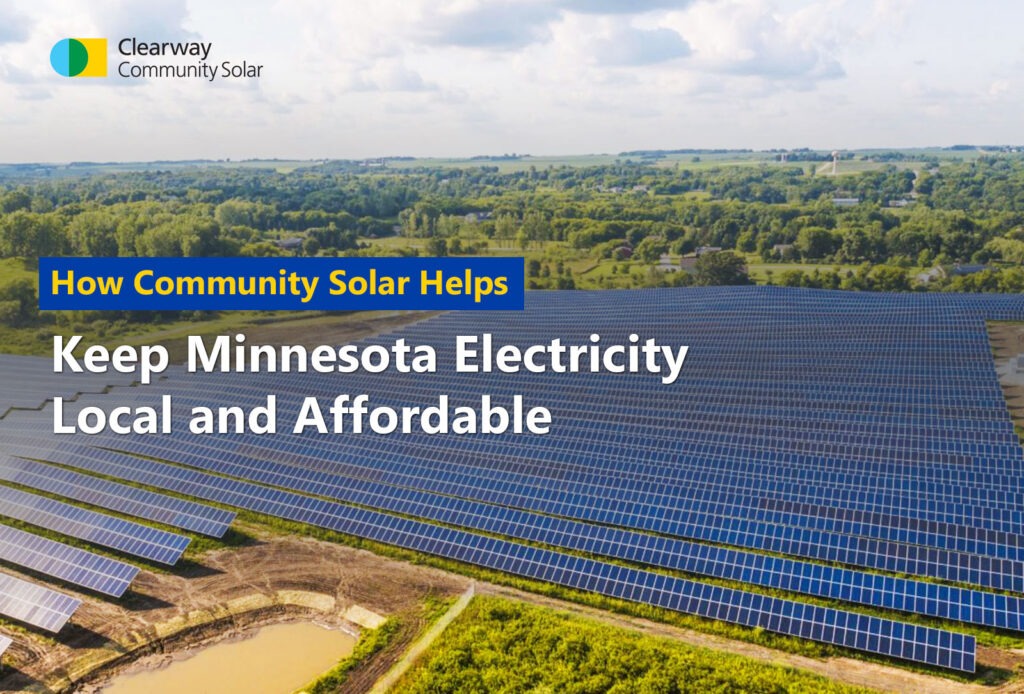
Minnesota is in the middle of one of the most extreme energy overhauls in its history. The state is committed to delivering 100% carbon-free electricity by 2040, which requires ending coal plants, building out wind and solar capacity, upgrading aging transmission infrastructure, and modernizing an electric grid that wasn’t designed with today’s energy generation mix in mind. These are the right investments for Minnesota’s long-term energy future, but they come with a short-term reality: since 2013, electricity prices in Minnesota have risen by nearly 30%, reaching 12.36 cents per kWh in 2024.
Even though that price is still below the national average and modest compared to what large-scale energy transitions have cost ratepayers in other states, it’s still a steep increase. For Minnesota households looking to manage those rising energy costs while still supporting the clean energy transition, community solar has emerged as one of the most practical tools available.
Minnesota Is Rebuilding Its Energy Infrastructure
The recent price increases Minnesotans have seen are due to a long-overdue transformation. Utility capital investment in Minnesota has been growing at a pace that hasn’t been seen since the 1970s and early 1980s, with more than $2 billion going toward transmission projects alone over the past decade to reinforce grid reliability through hundreds of miles of new power lines.
At the same time, coal is being phased out:
- The Sherco power plant is currently being redeveloped into the state’s largest solar and battery storage project, replacing what was previously Minnesota’s largest coal-fired facility.
- Xcel Energy, which serves more than 1.3 million Minnesota customers, is on track to retire its three remaining coal units by 2030 to meet the state’s interim milestone of 80% clean power that same year.
- Since 2005, the state’s electricity-related emissions have dropped by roughly 50%, driven primarily by the shift away from coal toward cleaner energy sources.
Because utilities in Minnesota operate as regulated monopolies, every major capital project — whether it’s a new transmission line, a wind farm, or a decommissioned coal plant — gets recovered through customer rates over time. Minnesota’s deputy commissioner of energy resources has noted that while fuel costs have actually come down in recent years, it’s transmission and distribution investments that have been the main reason for rising electricity bills.
What Can Help Offset the Increased Costs
Rate increases tied to infrastructure investment are a real part of Minnesota’s energy transition, but they aren’t the whole story. Several forces are working in the other direction, and understanding them helps explain why the community solar program has become such a practical tool for households looking to take control of their monthly bills.
Zero-Fuel Renewables and Energy Efficiency
Solar power and wind energy produce electricity without any ongoing fuel costs. Once the infrastructure is in place, the energy itself is free. Wind power costs in Minnesota have dropped 67% since 2009, making it the cheapest source of new electricity generation available in the state.
According to the Minnesota Clean Energy Factsheet, that dynamic is already playing out in Minnesota:
- Renewable sources now supply 33% of Minnesota’s electricity, and zero-carbon sources have produced the majority of the state’s power for five consecutive years.
- Minnesota’s power sector has cut carbon emissions 52% below 2005 levels, which is far ahead of the national average reduction of 38%.
- As coal plants retire and get replaced with wind, solar, and storage, the fuel price volatility that drives unpredictable rate spikes diminishes.
- Energy efficiency works the same way: lower energy consumption means less pressure to build new energy generation capacity, which slows the pace of capital spending that eventually shows up on customer bills.
Transmission Upgrades and Grid Optimization
Even though transmission investment is one of the bigger reasons for the recent rate increases, it’s also essential to making cheaper renewable energy available statewide. The long-term benefits are real, even if the costs come first:
- Upgraded lines allow wind and solar energy generated in rural parts of the state to reach population centers more efficiently, reducing the need for expensive peaking plants.
- Modern grid technologies reduce energy losses during delivery, so more of what’s generated is actually used.
- Once transmission debt is paid down, the infrastructure supports a cleaner, more efficient grid for decades.
Projects like CapX2020 — a joint initiative among 11 utilities that invested $2 billion in high-voltage transmission capacity across Minnesota and neighboring states — laid the foundation for that future.
Community Solar: The Local Buffer for Rising Costs
Transmission and renewable buildout deliver savings slowly. Community solar delivers them now. Since 2013, the U.S. Energy Information Administration (EIA) has worked to implement the Minnesota Department of Commerce’s regulations to enhance the state’s solar garden program. Community solar quickly became the dominant segment of the state’s solar market.
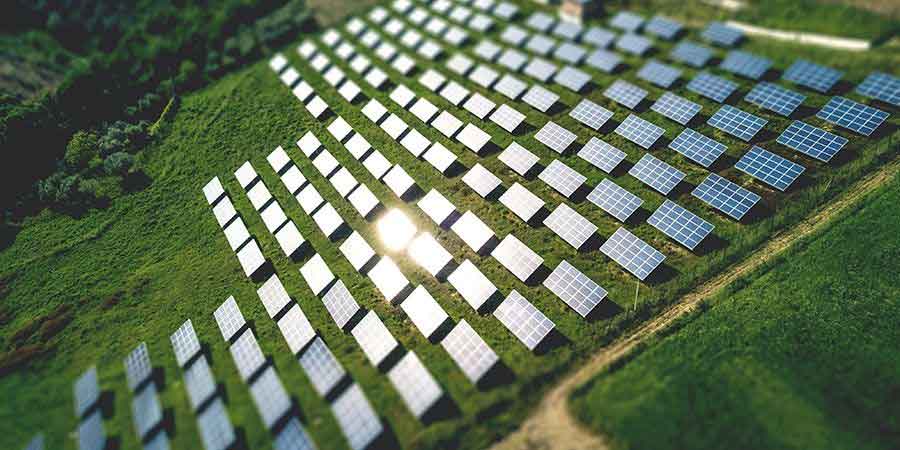
As of 2024, the state has more than 2,151 megawatts of community solar capacity installed, ranking first in the nation for years. The model is straightforward:
- Community solar subscribers receive monthly bill credits based on their share of a local solar farm’s output — at a rate lower than standard utility pricing.
- There’s no solar panel installation, no roof installation, and no upfront cost.
- Savings begin on the first billing cycle after a farm goes live.
- For the roughly 75% of Minnesota residents who can’t access rooftop solar due to physical or financial barriers, community solar is usually the only practical path to solar savings.
Keeping Energy Dollars in Minnesota
Every kilowatt-hour generated locally is a dollar that stays in Minnesota instead of flowing out of state to pay for imported fossil fuels. That matters more than it might seem. Minnesota currently spends billions each year on coal and natural gas sourced from other states. It’s money that leaves the local economy the moment it’s spent. Shifting toward locally generated renewables and distributed solar changes that equation.
The economic footprint of Minnesota’s clean energy economy is already substantial:
- The clean energy workforce grew to a record 63,802 jobs in 2024, adding nearly 1,700 positions across energy efficiency, renewable energy, and grid technologies.
- Nearly 40% of those jobs are located in Greater Minnesota, meaning the economic benefits are reaching rural communities, not just metro areas.
- Each community solar farm generates tax revenue for local counties, land lease payments for landowners, and construction and maintenance jobs that circulate within the local economy.
When a solar farm is built in a Minnesota county, the benefits flow to subscribers and stay embedded in the community through lease income for farmers, property tax contributions to local governments, and jobs that don’t require relocation. Minnesota currently spends the equivalent of 4% of its GDP each year purchasing energy from other states, which is roughly $13 billion annually that could instead be invested in Minnesota’s own sustainable energy infrastructure and workforce. Every local solar farm built is a step toward reclaiming a portion of that outflow.
Distributed generation — solar produced close to where it’s consumed — also reduces strain on long-distance transmission lines, lowers delivery losses, and supports grid reliability at the local level. As Minnesota continues building out its community solar portfolio, those local benefits compound.
Get Involved in Minnesota’s Clean Energy Future With Clearway Community Solar
Minnesota’s clean energy transition is well underway, and for residents who want to participate directly, Clearway Community Solar offers one of the most accessible entry points available. As the largest community solar provider in the country, Clearway has an established footprint in Minnesota, with farms serving customers across the state through Xcel Energy’s service territory.
Getting started takes just a few steps. Be sure to have a recent utility bill on hand, since Clearway matched you to the right subscription size based on your energy use. From there, you can enroll online through Clearway’s portal or speak with a dedicated energy consultant.
Once enrolled, you’ll receive access to an online account portal where you can track your farm’s development, monitor solar production, and manage billing. Clearway doesn’t begin charging until your assigned farm is active and generating energy credits.

Want to learn more about Community Solar?
Our solar specialists can provide a free consultation.
Get Started