Community Solar vs. Rooftop Solar
How Community Solar and Rooftop Solar Compare
If you are thinking of going solar, you may be weighing several options. Community solar is a way for residents to participate in a renewable energy program without the need to install rooftop solar panels or solar shingles on their property. This means that even residents who are not homeowners can become part of a community solar farm. Clearway Community Solar offers solar farm subscriptions in Illinois, Massachusetts, Minnesota, and New York, and not only has built some of the country’s largest community solar farms but is the largest community solar owner in the United States.
Community solar has not been around as long as rooftop solar, but its rapid growth and adoption come down to the conveniences it offers and the practical differences between the two programs.
Community Solar vs. Rooftop Solar
Whether you are interested in supporting clean energy, lowering your carbon footprint, or simply living a more environmentally-friendly lifestyle, you might consider solar as an option for your home. From installation and costs to the qualification and enrollment process, see how rooftop solar systems differ from community solar.
 Community Solar Farms |  Rooftop Solar Systems |
|---|---|
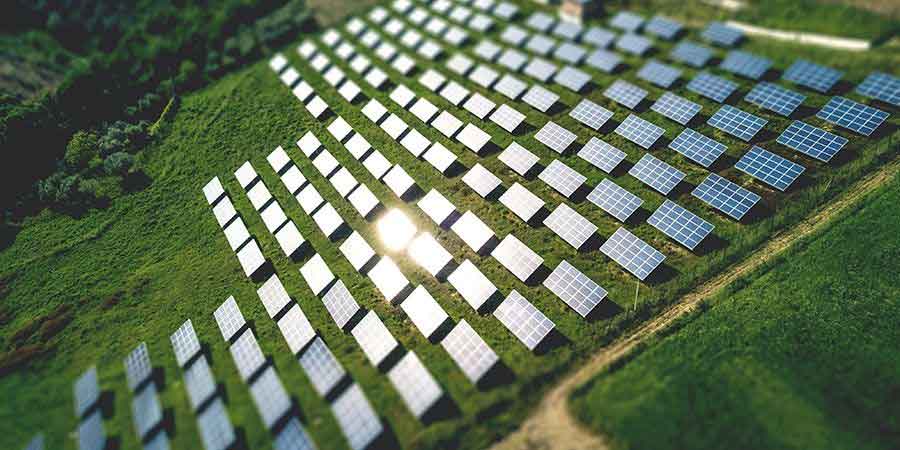
Community solar farms are offsite solar arrays that provide solar energy directly to a local power grid and a wider community, rather than one individual home. Farms are built and operated by dedicated professional teams. | Rooftop solar panels are installed on the roof of a home or business, and generate power for that location only. Panels are purchased or leased and may require inspections, upfront costs, and maintenance by the owner. |
How the Two Options Stack Up on the Details
| Factor | Community Solar | Rooftop Solar |
|---|---|---|
| Upfront cost | $0 | $29,500–$43,200 before incentives, depending on state (2026 average) |
| Federal ITC eligibility | Not applicable; subscribers do not own the installation | Not available for homeowner-purchased systems in 2026 (Section 25D expired December 31, 2025, under the One Big Beautiful Bill Act). Available for leased systems and PPAs under the commercial ITC if construction begins before July 2026. |
| Roof ownership required | No | Yes, in most cases |
| Available to renters | Yes | Rarely |
| Maintenance responsibility | Provider (Clearway) | Homeowner if purchased; provider if leased |
| Typical commitment | No long-term contract lock-in; cancel with notice | System lifespan of 25 to 30 years |
| Annual bill savings | Typically 5% to 15%, depending on state program | Varies; payback period is longer than it was before the 2026 federal ITC change |
| Availability | IL, MA, MN, and NY through Clearway | Any state where your roof qualifies |
What Is Community Solar?
Community solar is designed to be more accessible for apartment renters and homeowners, through solar farm subscriptions that eliminate the need for a rooftop installation. Clearway Community Solar offers the benefits of no upfront costs, no home visits, and no enrollment fees. Community solar farms are built and operated by companies like Clearway in offsite regional locations on unused land.
Because Clearway maintains the solar farm year-round in all weather conditions, system maintenance is not a concern for a resident. Once a solar farm has completed construction, undergone interconnection, and is placed in service, the solar energy produced is sent directly to the local electric grid. In return for the subscription, residents receive bill credits applied to their utility bill. The solar credits help lower electricity costs and often offset the cost.
What Is Rooftop Solar?
Rooftop solar requires solar panels to be installed on your roof. There are some instances where you place solar installations elsewhere on your property, but this is less common. The solar energy that is collected from the panels helps offset the energy usage in your home. The typical operational lifespan for this type of system is 25 to 30 years, and a Berkeley Lab survey of U.S. solar industry professionals found average lifespans stretching to 25 to 35 years as of 2025.
You can choose to purchase or lease a rooftop system, or finance it using solar loans. The costs and terms will vary, and it is important to understand who will be responsible for maintenance and repairs. If you purchase your rooftop solar system, you will need to maintain the system in all weather conditions, and the hidden costs of rooftop ownership can add up over the system’s lifetime. If the system has been leased, it is the responsibility of the solar company that owns the system to maintain it.
Some residents might find barriers to rooftop systems. In fact, a 2018 National Renewable Energy Laboratory (NREL) study on rooftop solar technical potential for low-to-moderate income households found that only 57% of residential homes in the U.S. are suitable for solar PV (the study’s primary focus was low-to-moderate income households, though the figure is often cited for residential buildings generally).
If you are a renter, it is likely not an option for you. More often, interested residents are impacted by shading – rooftop solar requires minimal shading, or frequently the age of a home. And of course, you should always check with your HOA to ensure that there are no restrictions, and consider the potential impact on resale value and roof damage. Learn more about differences between rooftop solar and community solar here.
How Much Does Rooftop Solar Cost in 2026?
Costs for rooftop solar vary by state. As of July 2026, the average residential system, including installation, runs $2.76 to $3.21 per watt across Clearway’s four service states, according to EnergySage marketplace data. The table below shows the average cost per watt alongside the average total system cost before any incentives, based on each state’s average system size.
| State | Average Cost Per Watt | Average System Cost Before Incentives |
|---|---|---|
| Illinois | $3.00 | $37,992 |
| Massachusetts | $2.92 | $31,966 |
| Minnesota | $3.20 | $40,546 |
| New York | $2.76 | $34,664 |
Federal Tax Credit and State Incentives
The federal residential solar investment tax credit (Section 25D) expired on December 31, 2025, under the One Big Beautiful Bill Act. Homeowners who purchase rooftop solar in 2026 are not eligible for a federal tax credit. The credit remains available for third-party-owned systems (leases and PPAs) if construction began before July 2026 or the system is placed in service by 2028 under the commercial solar ITC. Community solar subscribers were already not eligible for the residential ITC, since they do not own the installation, so this policy change does not affect the community solar comparison negatively.
Each state still offers its own incentives that can help offset the cost of a purchased system. Massachusetts’ SMART program provides performance-based payments on top of utility savings. New York’s NY-Sun rebate program and a state income tax credit can reduce upfront costs. Illinois’ Adjustable Block Program lets homeowners monetize Solar Renewable Energy Credits. Minnesota exempts solar equipment from state sales tax. None of these state programs replace the expired federal credit, but they meaningfully change the payback math depending on where you live.
Learn more about how Clearway’s pricing works here.
Benefits of Community Solar vs Rooftop Solar
What makes community solar a good option for your home? Whether you own or rent your property, Community solar is an accessible solar option if your roof does not meet qualifications due to your home's age or access to sunlight. Even if your roof does qualify, you may not want to be responsible for the maintenance of solar panels or manage the upfront costs. Or, plain and simply, you might just not like the way rooftop panels look on your property. For a closer look at how the two options weigh against each other, see the pros and cons of community solar.
Clearway Community Solar
No rooftop panel installation or maintenance required by homeowner.
No upfront costs or hidden fees.
Long-Term price security.
Conventional Rooftop Solar
Maintenance expense may be required.
Large installation costs may apply.
Long-Term price security.
Which Is Better: Community Solar or Rooftop Solar?
There is no single right answer. The better fit comes down to your living situation, your roof, and how much upfront cost and maintenance you are willing to take on.
Choose Community Solar if…
You rent your home, your roof does not qualify for a rooftop system, you want $0 upfront cost, or you do not want the ongoing maintenance responsibility that comes with owning panels. Community solar is available in Illinois, Massachusetts, Minnesota, and New York through Clearway.
Choose Rooftop Solar if…
You own your home, your roof qualifies for solar, you are comfortable financing a larger upfront investment (with or without a lease or PPA), and you want to explore incentives like the commercial ITC available through third-party ownership structures.
Not sure which path fits your household? Get a savings estimate or check our Frequently Asked Questions for more detail on how community solar works.